How is this different from a regular workbook or flashcards?
Workbooks and flashcards are passive — a child sits and fills in answers or drills facts. The Readiness Backpacks use hands-on games that get kids moving, talking, and playing their way to readiness. The learning happens through gameplay, so kids don't even realize they're "doing school." It's also a complete system — everything they need is in one bag, with a learning guide that tells parents exactly what to do each day.
Is this a one-time use product or can it be reused?
The whiteboard and marker are reusable — nothing gets written in permanently. The games inside are also fully reusable and can be played over and over. The only consumable is the marker, which is a standard dry-erase marker and easy to replace. Families can use the backpack all summer long without running out of anything.
Can I use this with more than one child?
Yes — and it works really well for siblings close in age or at the same grade level. If siblings are at different levels, the games inside are differentiated enough that you can adjust on the fly. The one thing to keep in mind is that some games are designed for 2–6 players, so having multiple kids actually makes the gameplay better.
How do I know my child is learning the right things?
Each backpack is built around the top 5 skills educators identify as most important for entering that grade level. These aren't random — they're the foundational skills that classroom teachers actually expect students to have on day one. The learning guide inside walks parents through each skill so there's no guesswork.
What if my child already knows some of this — is it still worth it?
Absolutely. Repetition and confidence-building matter just as much as new learning. If your child already knows a skill, playing the games reinforces it and keeps it sharp over the summer. It also gives kids a chance to show what they know — which is a huge confidence boost heading into a new school year. And most kids will find at least one or two areas where they have room to grow.
How long should we use it each day?
We recommend 10–15 minutes a day. That's it. Short, consistent sessions are actually more effective for young learners than longer ones, and it keeps the experience fun rather than feeling like homework.
Do I need to be a teacher to use this with my child?
Not at all — that's the whole point. The learning guide is written for parents, not educators. It tells you what to do, how to play each game, and what to look for as your child learns. If you can sit down and play a game with your kid, you can use this backpack.
What if my child gets frustrated or doesn't want to do it?
That's completely normal, especially at first. Our biggest tip: keep it feeling like play, not practice. Follow your child's lead — if they're done after 5 minutes, that's okay. Come back tomorrow. The games are designed to be engaging, but every child is different. The learning guide includes some tips for keeping sessions low-pressure and positive.
My child is between grade levels — which backpack should I buy?
When in doubt, go with the lower level. It's always better for a child to feel successful and confident than to feel behind. A child who masters the Pre-K skills will be that much more ready for the Kindergarten backpack the following summer. You can also reach out to us and we're happy to help you choose based on where your child is right now.
My child has an IEP / learning delay — is this appropriate for them?
Yes, with the right expectations. The hands-on, game-based format actually works really well for kids who struggle with traditional worksheets or sitting still. We'd recommend choosing the backpack level that matches where your child is developmentally, not necessarily their grade placement. And always loop in your child's therapist or teacher if you're unsure — they'll know best how to support your child with the activities.
We homeschool — will this work for us?
It's a great fit for homeschool families. The skills covered align with what students are expected to know at each level, so it works as a check-in or supplement no matter what curriculum you're using. Many homeschool parents use it as a low-prep, high-engagement activity for days when they want something fun and structured without a lot of setup.
When should we start using this — right when summer begins?
Anytime during the summer works, but starting in June or early July is ideal. That gives families enough time to work through the content without rushing, and keeps the skills fresh heading into fall. We don't recommend waiting until the last two weeks before school — short daily sessions over several weeks are much more effective than cramming.


 Kindergarten Readiness Backpack
$94.95$119.95Save $25.00
Kindergarten Readiness Backpack
$94.95$119.95Save $25.00
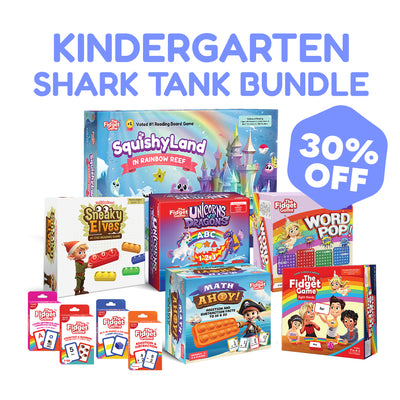 Kindergarten Shark Tank Bundle
Best ValueFull kindergarten bundle - 6 games included
$199.99$290.00Save $90.01
Kindergarten Shark Tank Bundle
Best ValueFull kindergarten bundle - 6 games included
$199.99$290.00Save $90.01
 Kindergarten Classroom Bundle
Best Value!Full Kindergarten Bundle - 7 Games + 4 Card Packs + Extra Mats Included
$218.92$364.87Save $145.95
Kindergarten Classroom Bundle
Best Value!Full Kindergarten Bundle - 7 Games + 4 Card Packs + Extra Mats Included
$218.92$364.87Save $145.95


