


30 CVC words
Educator CreatedDesigned by teachers
30-day returnshassle-free
Secure paymentsSSL encrypted
Ships in 3 daysfrom the US
Sneaky Elves
Sneaky Elves
Regular price
$29.99
Sale price
$29.99
Regular price
$34.99
Unit price
per
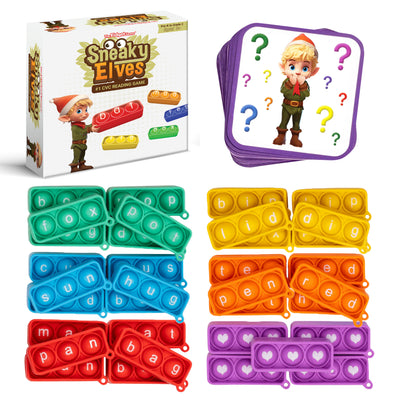
What's Inside The Box
Skills Covered After 30 Days
- Learn letter sound blending
- Master 30 CVC words
- Increase word recognition
- Improve fluency
Key Features
- Ages 4+
- 2-6 Players (or 1-on-1 fun)
- Quick & Easy Play (10 min)
Educational Standards
Common core
- CCSS.ELA-LITERACY.RF.K.2.D Isolate and pronounce the initial, medial vowel, and final sounds (phonemes) in three-phoneme (consonant-vowel-consonant, or CVC) words.
- CCSS.ELA-LITERACY.RF.K.3.A Demonstrate basic knowledge of one-to-one letter-sound correspondences by producing the primary sound or many of the most frequent sounds for each consonant.
- CCSS.ELA-LITERACY.RF.1.2.C Isolate and pronounce initial, medial vowel, and final sounds (phonemes) in spoken single-syllable words.
TEKS
- K.2B.ii: using letter-sound relationships to decode, including VC, CVC, CCVC, and CVCC words;
- 1.2B.i: decoding words in isolation and in context by applying common letter sound correspondences;
B.E.S.T
- ELA.K.F.1.3.c Decode consonant-vowel-consonant (CVC) words.
- ELA.1.F.1.3 Decode and encode regularly spelled one-syllable words.
Ontario
- K- OE1.1 explore sounds, rhythms, and language structures, with guidance and on their own
- K-OE1.11 demonstrate an awareness that words can rhyme, can begin or end with the same sound, and are composed of phonemes that can be manipulated to create new words
- K- OE11.8 demonstrate knowledge of most letters of the alphabet in different contexts
- Grade 1- B2.3 identify, read, and spell most common grapheme-phoneme correspondences of consonants and vowels, with automaticity
- Grade 1- B2.4 use phonics knowledge and phonemic blending to read words, and phonemic segmentation to spell phonetically regular words, in isolation and various text contexts
BC
- K- Language features, structures, and conventions: concepts of print, letter knowledge, phonemic and phonological awareness, letter formation
- Grade 1- Language features, structures, and conventions: concepts of print, print awareness, phonemic and phonological awareness, letter formation
Alberta
- K- Children make connections between letters and sounds in words.
- K- Children experiment with sounds in words.
- K- Children recognize some letters and words with speed and accuracy.
- Grade 1- Students recognize and analyze letters and sounds in words.
- Grade 1- Students apply accuracy, appropriate rate, and expression in the development of fluency.
Manitoba
- K- Recognize, apply, and adapt rules and conventions (e.g., form, genre, grammar, register, punctuation, elements of design, spelling, legibility).
- K- Identify, analyze, and apply understandings of whole-part-whole relationships (e.g., function and relationship of parts within a whole design, cueing systems, fluency, word study).
- Grade 1- Recognize, apply, and adapt rules and conventions (e.g., form, genre, grammar, register, punctuation, elements of design, spelling, legibility).
- Grade 1- Identify, analyze, and apply understandings of whole-part-whole relationships (e.g., function and relationship of parts within a whole design, cueing systems, fluency, word study).
New Brunswick
- K- Apply letter-sound knowledge to decode words and simple connected text.
- Grade 1- Apply letter-sound knowledge to decode words and connected text.
- Newfoundland & Labrador
- K- GCO 4: Students will be expected to select, read, and view with understanding a range of literature, information, media, and visual texts. 4.3 use strategies to make sense of texts 4.5 demonstrate letter knowledge.
- Grade 1- GCO 4: Students will be expected to select, read, and view with understanding a range of literature, information, media, and visual texts.4.3 use strategies to make sense of texts
Nova Scotia
- K- Use phonics knowledge and phonemic blending to read words in isolation and various text contexts.
- K- Use phonemic segmentation to spell phonetically regular words, in isolation and various text contexts.
- Grade 1- Use phonics knowledge and phonemic blending to read words in isolation and various text contexts.
- Grade 1- Use phonemic segmentation to spell phonetically regular words, in isolation and various text contexts.
Prince Edward Island
- K- understand basic concepts of print including directionality, word, space, letter, and sound
- K- begin to use knowledge of sound-symbol relationships as one reading cue (e.g., initial and final consonants)
- Grade 1- understand basic concepts of print including directionality, word, space, letter, and sound
- Grade 1- begin to use knowledge of sound-symbol relationships as one reading cue (e.g., initial and final consonants)
Saskatchewan
- K- CCK.2 Use and construct symbols, pictures, and dramatizations to communicate feelings and ideas in a variety of ways.
- Grade 1- CC1.2 Represent key ideas and events, in a logical sequence and with detail, in different ways (including dramatization, pictures, sounds, physical movement, charts, models, and drawings).
Year 1
- Apply phonic knowledge and skills as the route to decode words
- Respond speedily with the correct sound to graphemes (letters or groups of letters) for all 40+ phonemes, including, where applicable, alternative sounds for graphemes
- Read accurately by blending sounds in unfamiliar words containing GPCs that have been taught
Year 2
- Continue to apply phonic knowledge and skills as the route to decode words until automatic decoding has become embedded and reading is fluent
Our games are used in 50,000+ classroomsSpecial discounts for school districts and homeschoolers.
Get a Quote


Families Who Have Already Learned to Read
5.0
Skills Built
What skills does Sneaky Elves build?
Phonics
Connecting sounds to written letters
Blends
Combining consonant sounds together
Fluency
Reading smoothly and accurately
30-Day Money Back Guarantee
How to Play
How to play Sneaky Elves
1
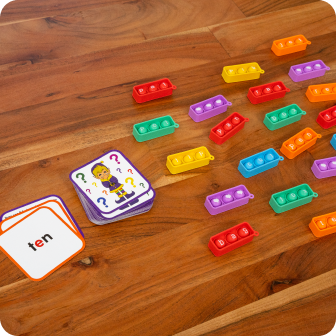
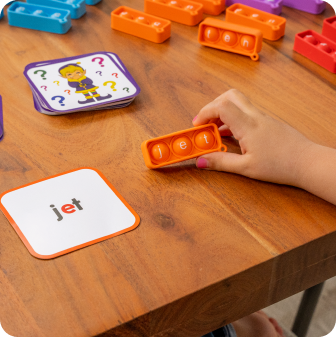
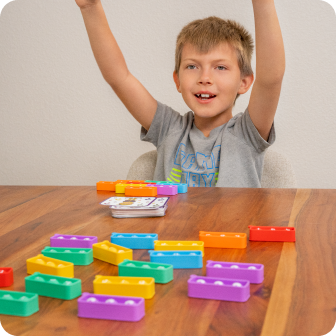
Place the fidget words and card deck in the center
2
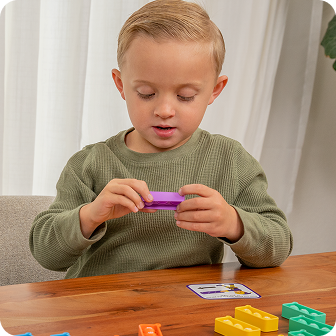
Draw a card & find the matching fidget
3
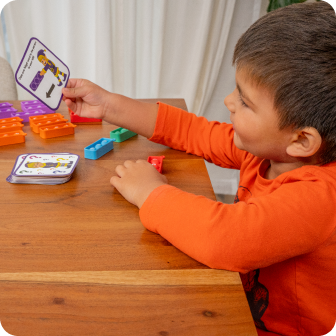
Sound out the word as you pop bubbles
4
Watch out for sneaky elves—they'll make you pass a fidget to a neighbor!
5
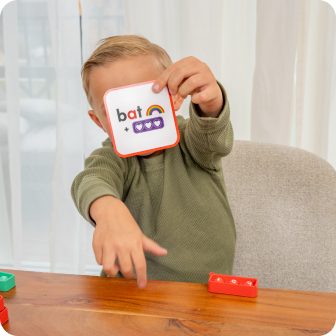
If you get a rainbow card- grab an extra heart fidget!
6
Collect the most fidget words to win!
Watch How Sneaky Elves Works


* Results based on internal study with regular users. Individual results may vary.
You ask, we answer!
What is the return policy?
We offer a 30-day return policy for eligible items.