


4 fidget mats
Educator CreatedDesigned by teachers
30-day returnshassle-free
Secure paymentsSSL encrypted
Ships in 3 daysfrom the US
Nutty Digraphs
Nutty Digraphs
Regular price
$29.99
Sale price
$29.99
Regular price
$34.99
Unit price
per
What's Inside The Box
Skills Covered After 30 Days
- Decode words with common consonant digraphs (ch, sh, th, wh, ph, and ck)
- Strengthens phonics skills essential for reading success
- Builds automaticity with tricky letter combinations that appear in everyday texts
- Supports reading fluency by reducing decoding effort word by word
- Reinforces digraph recognition in both the beginning and ending positions of words
Key Features
- Ages 5+
- 2-4 Players (or 1-on-1 fun)
- Quick & Easy Play (10 min)
Educational Standards
Common Core
- CCSS.ELA.RF.1.3.a Know the spelling-sound correspondences for common consonant digraphs.
- CCSS.ELA.RF.1.3.b Decode regularly spelled one-syllable words.
- CCSS.ELA.RF.1.3 Know and apply grade-level phonics and word analysis skills in decoding words.
- CCSS.ELA.RF.2.3.b Know spelling-sound correspondences for additional common vowel teams.
B.E.S.T.
- BEST.ELA.K.F.1.3 Use knowledge of grade-level phonics and word analysis skills to decode words, including consonant sounds, short vowels, and common high-frequency words.
- BEST.ELA.1.F.1.3.a Use knowledge of consonant digraphs (ch, sh, th, wh) to decode words.
- BEST.ELA.1.F.1.3 Use knowledge of grade-level phonics including consonant blends, digraphs, short and long vowels, and common word patterns to decode words.
- BEST.ELA.1.F.1.3.c Decode regularly spelled one-syllable words and read grade-level high-frequency words.
- BEST.ELA.2.F.1.3 Use knowledge of grade-level phonics including vowel teams, r-controlled vowels, silent letters, and multisyllabic words to decode text.
TEKS
- TEKS.ELA.1.3.B Decode words with consonant digraphs (ch, tch, sh, th, wh, ph).
- TEKS.ELA.1.3 Demonstrate and apply phonetic knowledge including consonant blends, digraphs, and short/long vowels.
- TEKS.ELA.1.4 Read aloud grade-level text with appropriate automaticity, prosody, accuracy, and rate.
- TEKS.ELA.2.3.B Decode words with consonant blends and digraphs in initial and final positions.
Ontario
K — OE1.1 Explore sounds, rhythms, and language structures, with guidance and on their own
K — OE2.2 Identify and generate rhyming words, and identify and produce words that begin with the same initial sound
Grade 1 — B2.1 Use understanding of the sound structure of spoken words to orally isolate, blend, and segment phonemes
Grade 1 — B2.2 Use knowledge of the relationships between letters and sounds, including consonant digraphs, to read and spell words
Grade 2 — B2.1 Use phonics knowledge, including phonemic blending, to read and spell words, including common digraphs
Grade 2 — B2.2 Use knowledge of the relationships between letters and sounds, including consonant and vowel digraphs, to read and spell words
Grade 3 — B2.1 Use phonics knowledge, including knowledge of digraphs and vowel patterns, to read and spell unfamiliar words
British Columbia
K — Language features, structures, and conventions: phonemic and phonological awareness, including recognizing that letters represent sounds and beginning to connect letter combinations to sounds
Grade 1 — Language features, structures, and conventions: phonological awareness; phonics and word study, including decoding words using knowledge of sound-letter relationships and common letter patterns such as digraphs
Grade 2 — Language features, structures, and conventions: phonics and word study, including applying knowledge of digraphs and other letter combinations to decode unfamiliar words
Grade 3 — Language features, structures, and conventions: word study skills, including using knowledge of letter patterns and phonics generalizations to read with accuracy and fluency
Alberta
K — Children make connections between letters and sounds in words; children are developing awareness of the relationship between spoken and written language
Grade 1 — Students manipulate sounds in words in oral language; students apply phonic knowledge and skills to decode words, including recognizing that two letters can represent one sound
Grade 2 — Students apply phonic knowledge, including knowledge of digraphs (two letters representing one sound), to read and spell words accurately
Grade 3 — Students apply word identification strategies, including phonics knowledge of digraphs and common letter patterns, to read unfamiliar words
Manitoba
K — Recognize, apply, and adapt rules and conventions: developing awareness of sound-symbol relationships and that some sounds are represented by two letters working together
Grade 1 — Recognize, apply, and adapt rules and conventions: apply phonics knowledge including digraphs to decode words in reading; understand that letter combinations can represent single sounds
Grade 2 — Recognize, apply, and adapt rules and conventions: apply growing phonics knowledge, including digraphs and vowel patterns, to read and write words accurately
Grade 3 — Recognize, apply, and adapt rules and conventions: use knowledge of word structure, including digraphs and common spelling patterns, to read and write with increasing accuracy
New Brunswick
K — Demonstrate an awareness of words and some sounds in spoken language; begin to understand that two letters together can make one sound
Grade 1 — Demonstrate an awareness of sounds in spoken language; apply knowledge of digraphs when decoding words in reading and encoding words in writing
Grade 2 — Apply phonics knowledge, including consonant and vowel digraphs, to read and spell words accurately in a variety of contexts
Grade 3 — Use phonics and word identification strategies, including digraph knowledge, to read unfamiliar words with increasing independence
Newfoundland & Labrador
K — GCO 4: 4.5 Demonstrate letter knowledge, including early awareness that certain letter combinations represent single sounds
Grade 1 — GCO 4: 4.3 Use strategies to make sense of texts, including applying phonics knowledge such as digraphs to decode unfamiliar words
Grade 1 — GCO 4: 4.5 Apply knowledge of sound-symbol relationships, including common digraphs, to read words accurately
Grade 2 — GCO 4: 4.3 Use a range of decoding strategies, including knowledge of digraphs and letter patterns, to read with accuracy and comprehension
Grade 3 — GCO 4: 4.3 Apply phonics knowledge, including digraphs and other spelling conventions, to read and write with increasing independence
Nova Scotia
K — Use knowledge of phonemes to isolate, blend, and segment one-syllable words orally; develop awareness that two letters can combine to represent a single sound
Grade 1 — Use knowledge of phonemes to isolate, blend, and segment words orally; apply knowledge of digraphs when reading and writing words
Grade 2 — Apply phonics knowledge including digraphs and vowel patterns to read and spell words; use word identification strategies to read unfamiliar words accurately
Grade 3 — Use phonics knowledge, including digraphs and common word patterns, to read and write unfamiliar words with growing independence
Prince Edward Island
K — Understand basic concepts of print including directionality, word, space, letter, and sound; develop early awareness of sound-letter relationships including that two letters can represent one sound
Grade 1 — Understand basic concepts of print including directionality, word, space, letter, and sound; apply phonics knowledge including digraphs to decode words when reading
Grade 2 — Apply phonics knowledge, including consonant and vowel digraphs, to read and spell words in reading and writing contexts
Grade 3 — Use phonics and word study strategies, including knowledge of digraphs and spelling patterns, to read and write unfamiliar words accurately
Saskatchewan
K — CCK.2 Use and construct symbols, pictures, and dramatizations to communicate feelings and ideas; develop early awareness that letters and letter combinations represent sounds in words
Grade 1 — CC1.2 Represent key ideas and events in a logical sequence and with detail; apply phonics knowledge including digraphs to decode words when reading aloud and independently
Grade 2 — CR2.1 Use a variety of strategies to construct meaning from texts, including applying knowledge of digraphs and letter patterns to decode unfamiliar words
Grade 3 — CR3.1 Read and demonstrate comprehension of a variety of grade-appropriate texts; apply word identification strategies including digraph knowledge to read accurately and fluently
Our games are used in 50,000+ classroomsSpecial discounts for school districts and homeschoolers.
Get a Quote

Skills Built
What skills does Nutty Digraphs build?
Phonics
Connecting sounds to written letters
Blends
Combining consonant sounds together
30-Day Money Back Guarantee
How to Play
How to play Nutty Digraphs
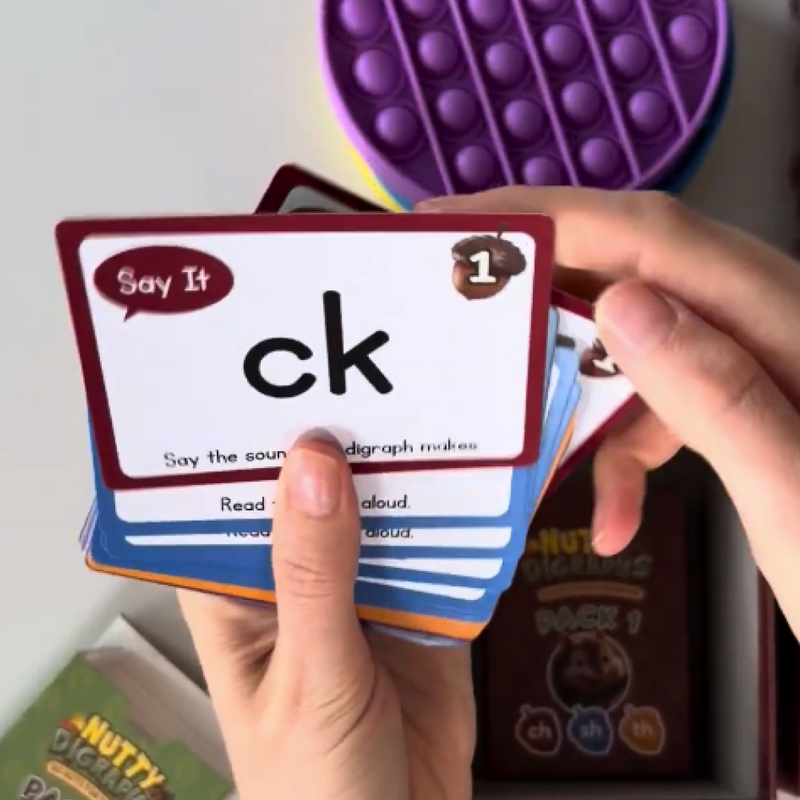
1
Choose a card & complete the challenge.
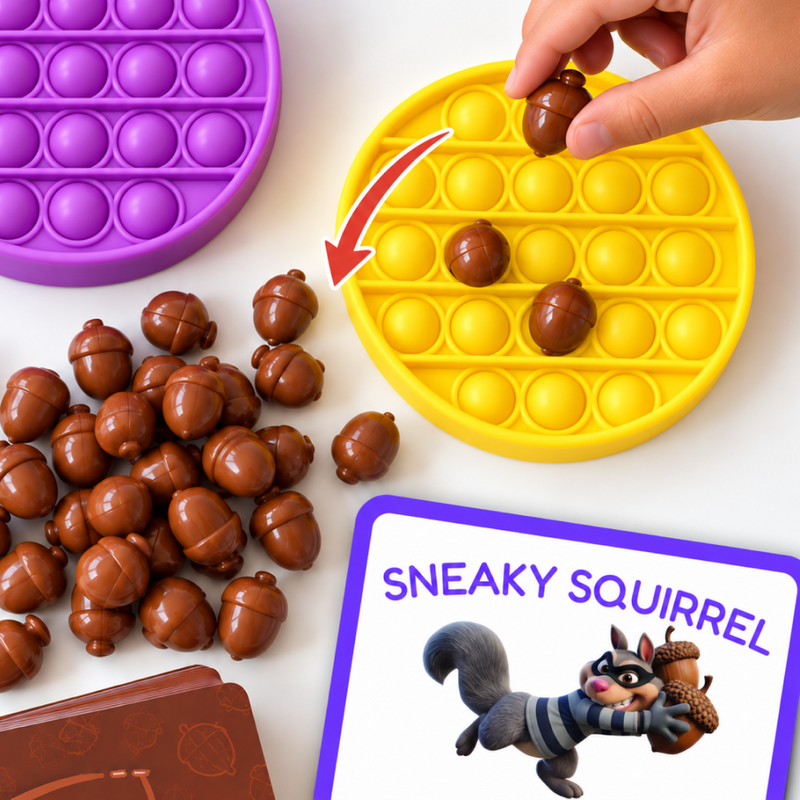
2
Add acorns to your nest.
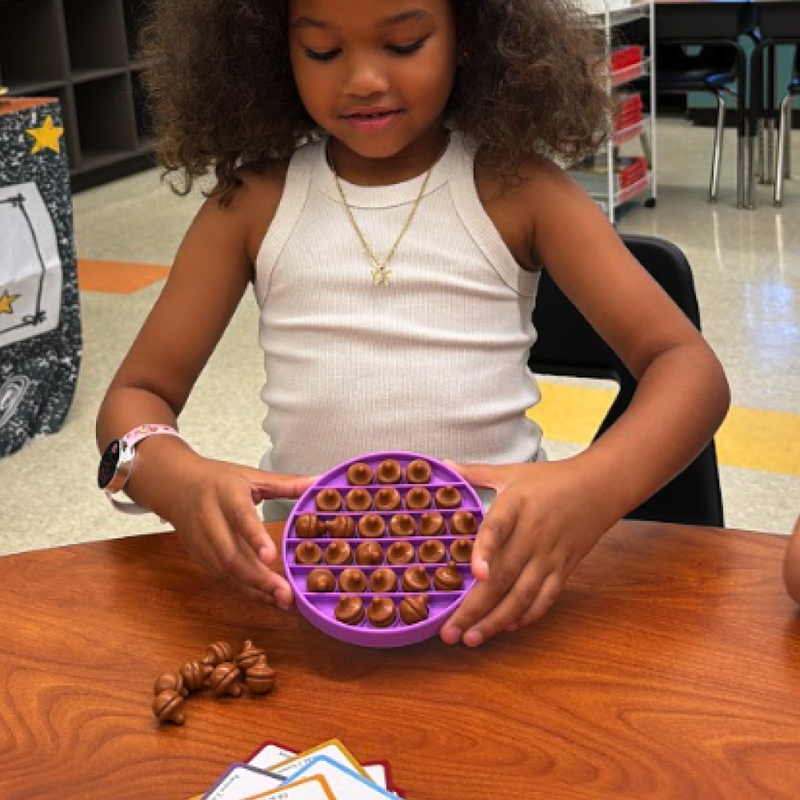
3
Fill your nest to win!


* Results based on internal study with regular users. Individual results may vary.
You ask, we answer!
What is the return policy?
We offer a 30-day return policy for eligible items.