


Squishy pet
Educator CreatedDesigned by teachers
30-day returnshassle-free
Secure paymentsSSL encrypted
Ships in 3 daysfrom the US
Pablo the Pig! (Squishy Pets 2)
Pablo the Pig! (Squishy Pets 2)
Regular price
$49.99
Sale price
$49.99
Regular price
Unit price
per
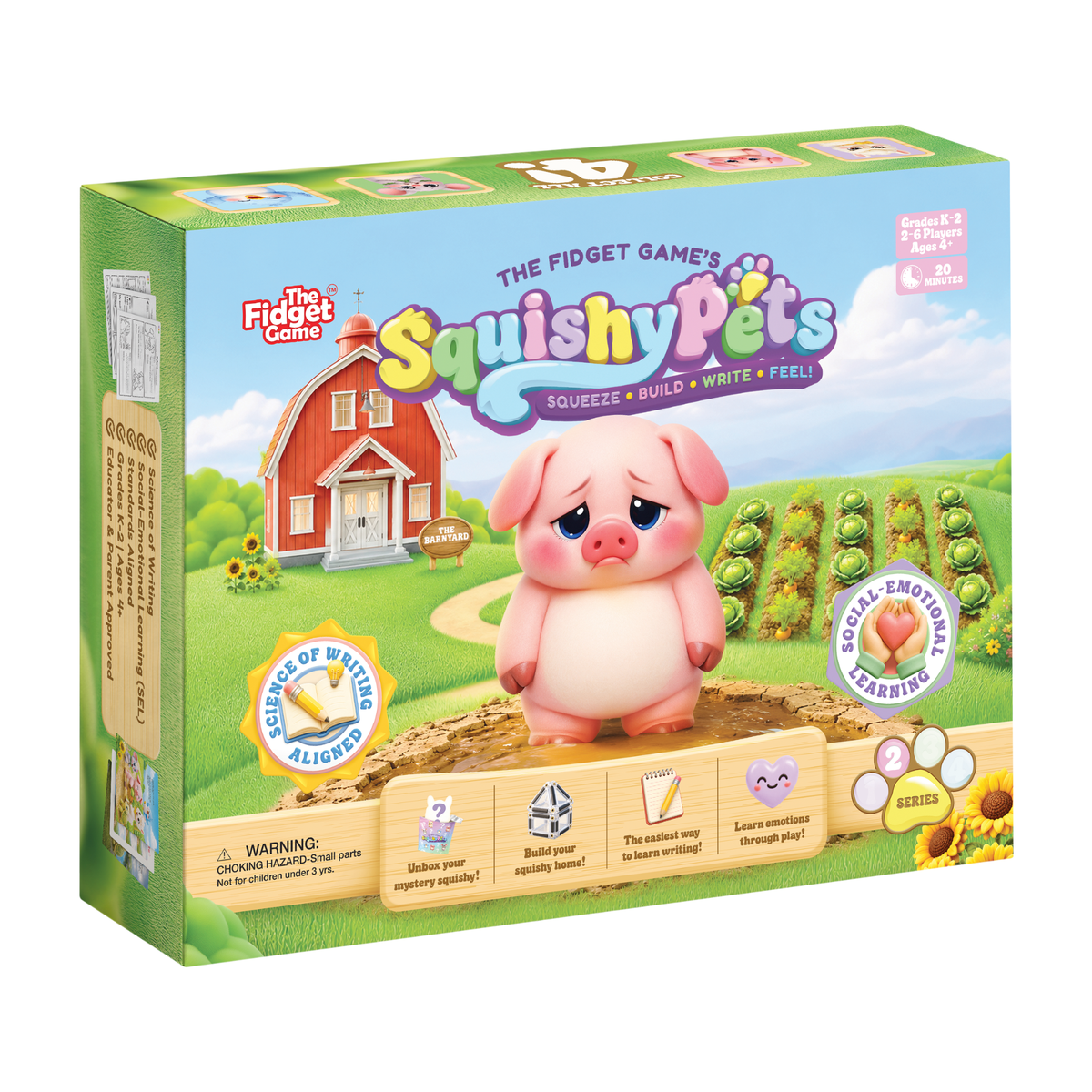
What's Inside The Box
Skills Covered After 30 Days
- Help children understand that sadness is a normal feeling that comes and goes
- Teach kids to slow down and care for their feelings with the Pig Pause
- Strengthen story writing, fact sharing, and opinion writing skills
- Build vocabulary, word work, and handwriting skills
- Encourage empathy and kindness toward friends who are feeling down
- Boost confidence in asking for help and sharing feelings with others
Key Features
- Ages 4+
- 1-on-1 fun!
Educational Standards
Common Core
Kindergarten
Writing
- CCSS.ELA-Literacy.W.K.1 Write opinion pieces (drawing/dictating/writing) and state an opinion/preference.
- CCSS.ELA-Literacy.W.K.2 Write informative/explanatory texts (name topic + supply info).
- CCSS.ELA-Literacy.W.K.3 Write narratives (single event or loosely linked events, in order, reaction).
Response-writing
- CCSS.ELA-Literacy.RL.K.2 Retell familiar stories, including key details (with prompting/support).
- CCSS.ELA-Literacy.RL.K.3 Identify characters, settings, and major events (with prompting/support).
- CCSS.ELA-Literacy.RL.K.9 Compare/contrast adventures and experiences of characters (with prompting/support).
- CCSS.ELA-Literacy.W.K.8 Recall/gather information to answer a question (with guidance/support).
Transcription / conventions
- CCSS.ELA-Literacy.L.K.1.a Print many upper- and lowercase letters.
- CCSS.ELA-Literacy.L.K.2 Capitalization, punctuation, and spelling (K-level conventions).
- L.K.2.a Capitalize first word + pronoun “I”
- L.K.2.b Recognize and name end punctuation
- L.K.2.c Write letters for most consonant + short-vowel sounds
Grade 1
Writing
- CCSS.ELA-Literacy.W.1.1 Opinion writing: introduce topic/book, state opinion, give a reason, closure.
- CCSS.ELA-Literacy.W.1.2 Informative writing: name topic, supply facts, closure.
- CCSS.ELA-Literacy.W.1.3 Narrative writing: sequenced events, details, temporal words, closure.
Response-writing
- CCSS.ELA-Literacy.RL.1.2 Retell stories, key details, central message/lesson.
- CCSS.ELA-Literacy.RL.1.3 Describe characters, settings, major events using key details.
- CCSS.ELA-Literacy.RL.1.9 Compare/contrast adventures and experiences of characters.
- CCSS.ELA-Literacy.W.1.8 Recall/gather information to answer a question (with guidance/support).
Transcription / conventions
- CCSS.ELA-Literacy.L.1.1 Grammar/usage (sentence construction support).
- L.1.1.a Print all upper- and lowercase letters
- L.1.1.j Produce/expand simple and compound sentences in response to prompts
- CCSS.ELA-Literacy.L.1.2 Capitalization, punctuation, spelling.
Grade 2
Writing
- CCSS.ELA-Literacy.W.2.1 Opinion writing: reasons + linking words + concluding statement/section.
- CCSS.ELA-Literacy.W.2.2 Informative writing: introduce topic, facts/definitions, concluding statement/section.
- CCSS.ELA-Literacy.W.2.3 Narrative writing: well-elaborated event(s), details, temporal words, closure.
Response-writing
- CCSS.ELA-Literacy.RL.2.2 Recount stories and determine central message/lesson/moral.
- CCSS.ELA-Literacy.RL.2.9 Compare/contrast two or more versions of the same story.
- CCSS.ELA-Literacy.W.2.8 Recall/gather information to answer a question.
Transcription / conventions
- CCSS.ELA-Literacy.L.2.1 Grammar/usage.
- CCSS.ELA-Literacy.L.2.2 Capitalization, punctuation, spelling.
B.E.S.T.
Kindergarten
Communicating Through Writing
- ELA.K.C.1.1 Print many upper- and lowercase letters.
- ELA.K.C.1.2 Using a combination of drawing, dictating, and/or writing, create narratives with events in chronological order.
- ELA.K.C.1.3 Using a combination of drawing, dictating, and/or writing, express opinions about a topic or text with at least one supporting reason.
- ELA.K.C.1.4 Using a combination of drawing, dictating, and/or writing, provide factual information about a topic.
- ELA.K.C.1.5 With guidance/support, improve drawing and writing as needed by planning, revising, and editing.
Conventions
- ELA.K.C.3.1 Follow the rules of standard English grammar, punctuation, capitalization, and spelling appropriate to grade level.
Health
- HE.K.R.1.1 – Define and give examples of kindness and caring.
- HE.K.R.1.3 – Describe ways to show respect to others.
- HE.K.R.2.4 – Identify and recognize basic feelings.
- HE.K.R.2.5 – Identify personal strengths and actions individuals can do independently.
- HE.K.R.3.1 – Identify the roles and responsibilities of trusted adults.
- HE.K.R.4.1 – Identify when help is needed and who to ask for help.
- HE.K.R.4.2 – Identify the importance of sharing thoughts and ideas to solve problems.
Grade 1
Communicating Through Writing
- ELA.1.C.1.1 Print all upper- and lowercase letters.
- ELA.1.C.1.2 Write narratives that retell two or more appropriately sequenced events, including relevant details and a sense of closure.
- ELA.1.C.1.3 Write opinions about a topic or text with at least one supporting reason from a source and a sense of closure.
- ELA.1.C.1.4 Write expository texts about a topic, using a source, providing facts and a sense of closure.
- ELA.1.C.1.5 With guidance/support, improve writing as needed by planning, revising, and editing.
Conventions
- ELA.1.C.3.1 Follow the rules of standard English grammar, punctuation, capitalization, and spelling appropriate to grade level.
Health
- HE.1.R.1.2 – Describe the traits of a good friend.
- HE.1.R.1.5 – Identify strategies to overcome a challenge.
- HE.1.R.2.4 – Describe how individual actions can affect others.
- HE.1.R.2.6 – Identify healthy ways to express needs and wants.
- HE.1.R.4.1 – Identify the importance of working together to solve problems.
- HE.1.R.4.3 – Understand that conflict may arise when working together.
Grade 2
Communicating Through Writing
- ELA.2.C.1.1 Demonstrate legible printing skills.
- ELA.2.C.1.2 Write personal or fictional narratives using a logical sequence of events, transitions, and an ending.
- ELA.2.C.1.3 Write opinions about a topic or text with reasons supported by details from a source, use transitions, and provide a conclusion.
- ELA.2.C.1.4 Write expository texts about a topic, using a source, providing an introduction, facts, transitions, and a conclusion.
- ELA.2.C.1.5 Improve writing as needed by planning, revising, and editing (with guidance/support + peer feedback).
Conventions
- ELA.2.C.3.1 Follow the rules of standard English grammar, punctuation, capitalization, and spelling appropriate to grade level.
Health
- HE.2.R.1.1 – Identify the benefits of showing kindness and treating others with respect.
- HE.2.R.1.2 – Identify what a conflict is and how disagreements can happen.
- HE.2.R.2.3 – Demonstrate healthy ways to express needs, wants, and listening skills.
- HE.2.R.2.4 – Identify personal strengths and areas for improvement.
- HE.2.R.4.1 – Identify strategies to work together to solve problems.
- HE.2.R.4.2 – Identify how disagreements can be settled using conflict resolution skills.
TEKS
Kindergarten
Writing process + conventions
- K.10: Composition—writing process. The student uses the writing process recursively to compose multiple texts that are legible and use appropriate conventions.
- K.10.A plan by generating ideas (class discussions/drawings).
- K.10.B develop drafts (oral, pictorial, or written).
- K.10.C revise by adding details in pictures or words.
- K.10.D edit drafts (adult assistance) using standard English conventions, including complete sentences and correct spelling of grade-appropriate patterns/high-frequency words.
- K.10.E share writing.
Genre writing
- K.11: Composition—genres. Compose meaningful texts.
- K.11.A dictate/compose literary texts, including personal narratives.
- K.11.B dictate/compose informational texts.
Response writing
- K.6: Response skills. Provide oral/pictorial/written responses; retell texts; use evidence (with support).
- K.6.B provide an oral, pictorial, or written response to a text.
- K.6.C use text evidence to support an appropriate response.
- K.6.D retell texts in ways that maintain meaning.
Health
- *115.12(b)(5)(A) identify and practice behaviors that promote health such as brushing teeth, getting adequate sleep, and managing emotions
- *115.12(b)(6)(A) identify and describe feelings
Grade 1
Writing process + conventions
- 1.11: Composition—writing process. Plan, draft, revise, edit, publish/share.
- 1.11.A plan a first draft (drawing/brainstorming).
- 1.11.B develop drafts with structure + specific relevant details.
- 1.11.C revise by adding details in pictures or words.
- 1.11.D edit drafts using standard English conventions (complete sentences with subject-verb agreement; capitalization/punctuation; spelling of grade-appropriate patterns and high-frequency words with adult assistance, etc.).
- 1.11.E publish and share writing.
Genre writing
- 1.12: Composition—genres.
- 1.12.A dictate/compose literary texts, including personal narratives and poetry.
- 1.12.B dictate/compose informational texts, including procedural texts.
Response writing
- 1.7: Response skills.
- 1.7.B write brief comments on literary or informational texts.
- 1.7.C use text evidence to support an appropriate response.
- 1.7.D retell texts in ways that maintain meaning.
Health
- 115.13(b)(6)(A) identify and describe a variety of emotions
- 115.13(b)(6)(B) identify calming techniques such as breathing slowly that can be used to manage strong emotions
- 115.13(b)(8)(A) identify and practice strategies for managing strong emotions
- 115.13(b)(9)(A) demonstrate communication skills such as eye contact, attentive listening, and taking turns talking
Grade 2
Writing process + conventions
- 2.11: Composition—writing process. Plan, draft, revise, edit, publish/share.
- 2.11.A plan a first draft (drawing/brainstorming).
- 2.11.B develop drafts with structure + specific relevant details.
- 2.11.C revise by adding, deleting, or rearranging words/phrases/sentences.
- 2.11.D edit drafts using standard English conventions (sentence agreement; verb tense; punctuation; commas; contractions; spelling grade-appropriate patterns/high-frequency words, etc.).
- 2.11.E publish and share writing.
Genre writing
- 2.12: Composition—genres.
- 2.12.A compose literary texts, including personal narratives and poetry.
- 2.12.B compose informational texts, including procedural texts and reports.
- 2.12.C compose correspondence (thank you notes/letters).
Response writing
- 2.7: Response skills.
- 2.7.B write brief comments that demonstrate understanding.
- 2.7.C use text evidence to support an appropriate response.
- 2.7.D retell and paraphrase texts maintaining meaning and logical order.
Health
- 115.14(b)(6)(A) identify a variety of emotions and how they affect behavior
- 115.14(b)(6)(B) demonstrate strategies for managing emotions such as anger, sadness, and happiness
- 115.14(b)(8)(A) identify characteristics of effective communication such as listening, making eye contact, and taking turns talking
- 115.14(b)(9)(A) demonstrate strategies for resolving conflict
CASEL SEL Framework
Self-Awareness
- Identifying Emotions — Recognizing and naming one's emotions including anger, hurt, and sadness; identifying physical sensations associated with emotions (PreK-K, Grades 1-2)
- Recognizing Strengths — Understanding that all feelings belong and are part of oneself; recognizing the protective function of emotions (Grades 1-2)
- Self-Confidence — Developing positive self-concept by understanding that having anger doesn't make one "bad" (Grades 1-2)
Self-Management
- Impulse Control — Managing the urge to react immediately by pausing and breathing (PreK-K, Grades 1-2)
- Self-Discipline — Making intentional choices about behavior after acknowledging feelings; being "in charge" of responses (Grades 1-2)
- Stress Management — Using calming strategies including breathing, placing hand on heart, and self-talk to regulate emotional arousal (PreK-K, Grades 1-2)
- Expressing Emotions — Communicating with emotions through thanking and acknowledging them rather than suppressing or acting out (Grades 1-2)
Social Awareness
- Perspective-Taking — Understanding emotions from a new perspective (Grades 1-2)
Relationship Skills
- Communication — Using words and self-expression to address feelings and needs rather than physical reactions (Grades 1-2)
- Social Engagement — Receiving support and guidance from others when experiencing difficult emotions (PreK-K, Grades 1-2)
Responsible Decision-Making
- Identifying Problems — Recognizing when feelings arise and what triggers it (Grades 1-2)
- Analyzing Situations — Understanding the sequence of emotion, physical response, and behavioral choice (Grades 1-2)
- Evaluating Consequences — Recognizing that immediate reactions have different outcomes than calm, kind choices (Grades 1-2)
- Reflecting — Pausing to listen to emotions and choose responses intentionally (Grades 1-2)
Ontario
Kindergarten
- K-OE10 demonstrate awareness of letters, words, and print concepts in reading and writing
- K- OE9.1 use language (oral and emergent writing) to communicate thinking and learning
- K-OE1.1 Identify and describe their emotions and begin to understand their effects on themselves and others
- K-OE1.2 Describe and begin to apply strategies for managing feelings and emotions
- K-OE1.3 Demonstrate an awareness of their strengths and areas for growth
- K-OE2.1 Describe what they need to feel safe, secure, and comfortable in their environment
- K-OE3.1 Use self-awareness and self-monitoring skills to help them regulate their emotions and actions
Grade 1
- D1.1 identify topic, purpose, and audience for different types of texts
- D2.1 draft short texts including personal narratives and simple persuasive or procedural texts
- D3.2 revise and edit writing for clarity and correctness
- 1-OE1.1 Identify and describe a variety of emotions and their effects on themselves and others
- 1-OE1.2 Apply strategies for managing emotions and coping with stress
- 1-OE1.3 Identify and describe their strengths, interests, and areas for growth
- 1-OE2.1 Describe what is needed to feel safe, secure, and comfortable in different environments
- 1-OE3.1 Use self-awareness and self-monitoring skills to regulate emotions, maintain motivation, and manage impulsive behaviour
Grade 2
- D1.1 identify topic, purpose, and audience
- D2.1 draft short texts including narratives, persuasive texts, and procedural texts
- D3.2 revise and edit writing using conventions appropriate to grade level
- 2-OE1.1 Identify and describe a range of emotions and their influences on themselves and others
- 2-OE1.2 Apply strategies for managing emotions, maintaining motivation, and coping with stress
- 2-OE1.3 Identify and describe their strengths, interests, and areas for growth, and set goals to improve their learning
- 2-OE2.1 Describe behaviours and motivations that contribute to positive interactions and what they need to feel safe, secure, and comfortable
- 2-OE3.1 Use self-awareness and self-monitoring skills to help them regulate emotions, maintain motivation, and persist in working towards goals
British Columbia
Kindergarten
- Language features, structures, and conventions: concepts of print, letter knowledge, letter formation
- Create and communicate stories and other texts
- Personal awareness and responsibility: Recognize emotions
- Personal awareness and responsibility: Use strategies for managing emotions and dealing with stress
- Social awareness and responsibility: Build relationships and communicate with others
Grade 1
- Language features, structures, and conventions: simple sentences, capitalization, punctuation
- Create stories and informational texts for different purposes
- Personal awareness and responsibility: Identify and describe feelings and worries
- Personal awareness and responsibility: Recognize personal strengths and identify wants and needs
- Personal awareness and responsibility: Use strategies for managing emotions and dealing with stress
- Social awareness and responsibility: Build relationships, interact with others, and work collaboratively
- Social awareness and responsibility: Demonstrate respectful, inclusive behaviour in a variety of settings
Grade 2
- Language features, structures, and conventions: sentence structure, grammar, spelling patterns
- Create narratives and informational texts; express opinions with supporting reasons
- Personal awareness and responsibility: Identify personal strengths, areas of growth, and desired goals
- Personal awareness and responsibility: Recognize and explain how emotions influence behaviour
- Personal awareness and responsibility: Use strategies for managing emotions, stress, and challenging situations
- Social awareness and responsibility: Explain how others' actions and decisions affect themselves and others
- Social awareness and responsibility: Build relationships and work collaboratively with others from diverse backgrounds and perspectives
Alberta
Kindergarten
- Students express ideas and information using emergent writing
Students demonstrate letter formation and letter-sound knowledge - W–K.1 examine how personal choices and actions influence health and well-being
- W–K.2 identify circumstances that affect emotional responses
- W–K.3 identify personal behaviours in response to emotional states
- W–K.6 identify basic personal and social skills needed to establish and maintain relationships
- L–K.2 identify potential stressors and demonstrate positive strategies for dealing with them
Grade 1
- Students compose narrative and informational texts
- Students apply conventions of capitalization, punctuation, and spelling
- R–1.1 identify characteristics of the relationships that are closest to them
- R–1.2 examine the nature of conflict and demonstrate constructive strategies to resolve conflicts
- R–1.3 demonstrate strategies for developing and maintaining positive relationships
- R–1.7 examine situations where peer influence can be both helpful and harmful
- L–1.2 demonstrate a basic understanding of the connection between thoughts, feelings and actions
- L–1.3 identify personal responsibility for choices made
- L–1.4 demonstrate awareness that their actions and decisions affect self and others
Grade 2
- Students organize ideas into sequenced texts
- Students revise writing and apply grammar and spelling conventions
- R–2.1 identify ways of making and keeping friends
- R–2.2 apply strategies to manage and resolve interpersonal conflicts in peaceful ways
- R–2.3 demonstrate positive attitudes and behaviours to help in developing and maintaining relationships
- R–2.7 demonstrate basic skills for resisting peer pressure
- L–2.2 demonstrate strategies for dealing with upsetting events and people who may be of assistance
Manitoba
Kindergarten
- Recognize, apply, and adapt rules and conventions (form, grammar, punctuation, spelling, legibility)
- Use writing and representation to communicate ideas
- K.1.K.B.1 Recognize that emotions are a part of being human
- K.1.K.B.2 Identify feelings in self and others
- K.2.K.A.1 Recognize that individual actions have consequences for self
- K.3.K.B.1 Recognize situations and behaviours that contribute to healthy interactions with others
- K.4.K.A.1 Identify positive ways to communicate
Grade 1
- Recognize, apply, and adapt rules and conventions
- Compose texts for different purposes and audiences
- 1.1.1.B.1 Identify basic emotions and demonstrate appropriate ways to express them
- 1.1.1.B.2 Describe situations that may cause different emotions
- 1.3.1.B.1 Recognize characteristics of positive relationships
- 1.3.1.B.2a Identify ways to show respect for self and others
- 1.4.1.A.1 Demonstrate positive ways to communicate with others
Grade 2
- Recognize, apply, and adapt rules and conventions
- Organize ideas and communicate meaning clearly in writing
- 2.1.2.B.1 Describe how feelings can affect behaviour
- 2.1.2.B.2 Demonstrate a variety of ways to express emotions appropriately
- 2.3.2.B.1 Identify behaviours that support healthy relationships
- 2.3.2.B.2a Identify conflict and demonstrate constructive ways to resolve it
- 2.4.2.A.1 Demonstrate effective verbal and non-verbal communication skills
New Brunswick
Kindergarten
- Use letters and sounds to communicate meaning in writing
- Retell familiar texts using drawing and writing
- GCO 1: Students will demonstrate an understanding of themselves
- 1.1 identify and appropriately express their feelings
- 1.2 demonstrate self-awareness
- GCO 2: Students will demonstrate positive interaction with others
- 2.1 demonstrate co-operative behaviours in group settings
- 2.2 demonstrate respect for self and others
Grade 1
- Write brief responses to literary and informational texts
- Organize ideas into simple sentences
- GCO 1: Students will demonstrate an understanding of themselves
- 1.1 identify and appropriately express their feelings
- 1.2 demonstrate self-awareness
- 1.3 demonstrate self-confidence
- GCO 2: Students will demonstrate positive interaction with others
- 2.1 develop and practise communication skills
- 2.2 demonstrate respect for self and others
- 2.3 understand the importance of positive relationships
Grade 2
- Write responses supported by text evidence
- Compose narratives and informational texts with appropriate conventions
- GCO 1: Students will demonstrate an understanding of themselves
- 1.1 identify and appropriately express their feelings
- 1.2 demonstrate self-awareness and self-management
- GCO 2: Students will demonstrate positive interaction with others
- 2.1 develop and practise communication skills
- 2.2 demonstrate respect for self and others
- 2.3 understand the importance of positive relationships and develop strategies to maintain them
Newfoundland & Labrador
K- GCO 8 Students will be expected to use writing and other forms of representation to explore, clarify, and reflect on thoughts and experiences
K- Demonstrate letter knowledge and early writing behaviours
Grade 1- GCO 8 Create texts independently and collaboratively for different purposes
Grade 1- Use conventions appropriate to grade level
Grade 2- GCO 8 Create a range of texts and improve clarity and effectiveness
Grade 2- Apply conventions and organization strategies in writing
SEL Competence: Self-Awareness | GCO 2 Identify and monitor one's emotions, thoughts, and behaviours
- 2.3.1 Develop and use an emotion vocabulary
- 2.3.2 Recognize and accurately label one's emotions
- 2.3.3 Recognize they can have more than one emotion at a time
- 2.3.4 Recognize factors that affect one's emotions and thoughts
- 2.3.5 Recognize how emotions physically feel and present in one's body
- 2.3.6 Understand that individuals experience a range of emotions and thoughts
SEL Competence: Self-Awareness | GCO 3 Recognize the connections among emotions, thoughts and behaviours
- 3.3.1 Understand the role the brain plays in emotions
- 3.3.2 Connect emotion vocabulary to feelings, behaviour and health
- 3.3.3 Recognize how situations trigger emotions, thoughts and behaviours
SEL Competence: Self-Management | GCO 4 Regulate emotions, thoughts and behaviours
- 4.3.1 Understand there are different motives for behaviour
- 4.3.2 Use reflection to identify one's motivation for behaviour
- 4.3.3 Develop and use strategies to foster self-management
- 4.3.4 Develop and understand the value of positive thinking
- 4.3.5 Recognize that thoughts and feelings can be communicated in different ways
- 4.3.6 Engage in using health-promoting behaviours
SEL Competence: Self-Awareness | GCO 3
- 3.3.4 Recognize that strategies are used to manage one's emotions and thoughts
SEL Competence: Self-Management | GCO 4 & 5
- 4.3.3 Develop and use strategies to foster self-management (overlaps regulation)
- 4.3.6 Engage in using health-promoting behaviours
- 5.3.1 Understand the concepts of motivation, self-discipline and perseverance as they relate to goals
- 5.3.2 Understand the process for setting, working towards and accomplishing relevant goals
- 5.3.3 Develop a process to monitor achievement of goals
- 5.3.4 Develop organizational skills to support personal and learning goals
SEL Competence: Relationship Skills | GCO 9 Use relationship skills to interact with others in all environments
- 9.3.1 Identify and use characteristics of attentive listening
- 9.3.2 Communicate emotions to others effectively
- 9.3.3 Respond to others' verbal, non-verbal, situational and cultural cues
- 9.3.4 Practice how to give and receive authentic compliments and constructive feedback
- 9.3.5 Identify and practice ways to work and play respectfully with others
SEL Competence: Social Awareness | GCO 6 Develop the ability to take the perspective of and empathize with others
- 6.3.1 Recognize that others may have different viewpoints and experiences
- 6.3.2 Recognize that there is a diversity of feelings and responses to different viewpoints and experiences
- 6.3.3 Identify verbal, non-verbal, situational and cultural cues that indicate how others may feel
- 6.3.4 Develop relational skills to support another's emotional experience
Nova Scotia
K- Use emergent writing to communicate ideas and respond to texts
K- Name and form uppercase and lowercase letters
Grade 1- Write short narratives and informational texts
Grade 1- Apply capitalization, punctuation, and spelling patterns
Grade 2- Write organized narratives and informational texts
Grade 2- Revise and edit writing for clarity and conventions
Prince Edward Island
Kindergarten
- Demonstrate understanding that writing communicates meaning
- Use drawing and writing to respond to texts
- K.1 identify personal feelings and the feelings of others
- K.2 demonstrate an awareness of behaviours that show respect for self and others
- K.3 identify ways to communicate feelings, needs, and wants
- K.4 recognize the importance of getting along with others
Grade 1
- Create simple narratives and informational texts
Apply conventions appropriate to grade level - 1.1 identify a range of emotions in self and others
- 1.2 demonstrate an awareness that feelings influence behaviour
- 1.3 describe ways to express feelings appropriately
- 1.4 identify characteristics of positive relationships
- 1.5 demonstrate listening and speaking skills
Grade 2
- Compose narratives and informational texts with logical sequence
- Apply grammar, punctuation, and spelling conventions
- 2.1 recognize that everyone experiences a range of emotions
- 2.2 describe how emotions influence behaviour and decisions
- 2.3 demonstrate appropriate ways to express and manage emotions
- 2.4 identify behaviours that support healthy relationship
- 2.5 demonstrate effective communication skills
Saskatchewan
Kindergarten
- CCK.2 Use symbols, pictures, and emergent writing to communicate ideas
- CCK.4 Create simple messages and representations
- USC K.1 Examine basic habits and behaviors, and opportunities related to one's well-being and the well-being of others
- USC K.2 Explore expectations and rules that support safe and respectful environments
- USC K.3 Explore that who I am includes more than my physical self.
Grade 1
- CC1.2 Represent key ideas and events in logical sequence
- Compose simple texts using complete sentences
- USC 1.3 Investigate personal behaviours and opportunities that demonstrate responsibility in daily routines
- USC 1.4 Determine and practise safe behaviours in a variety of environments
- USC 1.5 Explore that individuals are unique and of value and deserve respect
Grade 2
- CC2.2 Communicate ideas and stories clearly with essential details
- Compose a range of texts including narratives and informational writing
- USC 2.1 Demonstrate a basic understanding of how thoughts, feelings, and actions influence health and well-being.
- USC 2.4 Examine social and personal meanings of "respect" and establish ways to show respect for self, persons, living things, possessions, and the environment.
CASEL SEL Framework
Self-Awareness
- Identifying Emotions — Recognizing and naming one's emotions including anger, hurt, and sadness; identifying physical sensations associated with emotions (PreK-K, Grades 1-2)
- Recognizing Strengths — Understanding that all feelings belong and are part of oneself; recognizing the protective function of emotions (Grades 1-2)
Self-Management
- Impulse Control — Managing the urge to react immediately by pausing and breathing (PreK-K, Grades 1-2)
- Self-Discipline — Making intentional choices about behavior after acknowledging feelings; being "in charge" of responses (Grades 1-2)
- Stress Management — Using calming strategies including breathing, placing hand on heart, and self-talk to regulate emotional arousal (PreK-K, Grades 1-2)
- Expressing Emotions — Communicating with emotions through thanking and acknowledging them rather than suppressing or acting out (Grades 1-2)
Social Awareness
- Perspective-Taking — Understanding emotions from a new perspective (Grades 1-2)
Relationship Skills
- Communication — Using words and self-expression to address feelings and needs rather than physical reactions (Grades 1-2)
- Social Engagement — Receiving support and guidance from others when experiencing difficult emotions (PreK-K, Grades 1-2)
Responsible Decision-Making
- Identifying Problems — Recognizing when feelings arise and what triggers it (Grades 1-2)
- Analyzing Situations — Understanding the sequence of emotion, physical response, and behavioral choice (Grades 1-2)
- Evaluating Consequences — Recognizing that immediate reactions have different outcomes than calm, kind choices (Grades 1-2)
- Reflecting — Pausing to listen to emotions and choose responses intentionally (Grades 1-2)
Our games are used in 50,000+ classroomsSpecial discounts for school districts and homeschoolers.
Get a Quote
30-Day Money Back Guarantee
How to Play
How to play Pablo the Pig! (Squishy Pets 2)
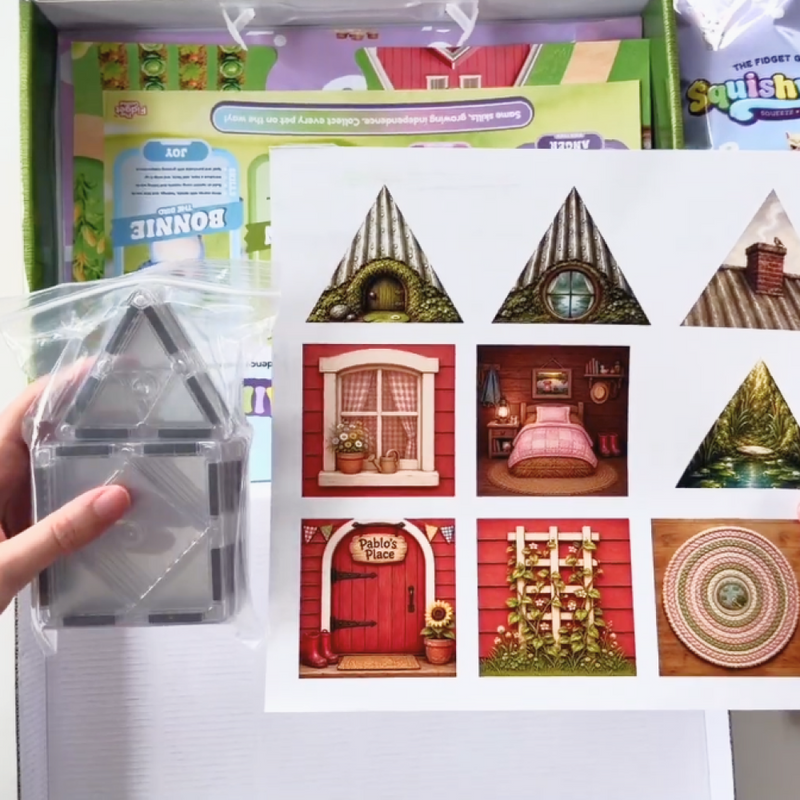
1
Build! Snap together your magnetic Squishy home.
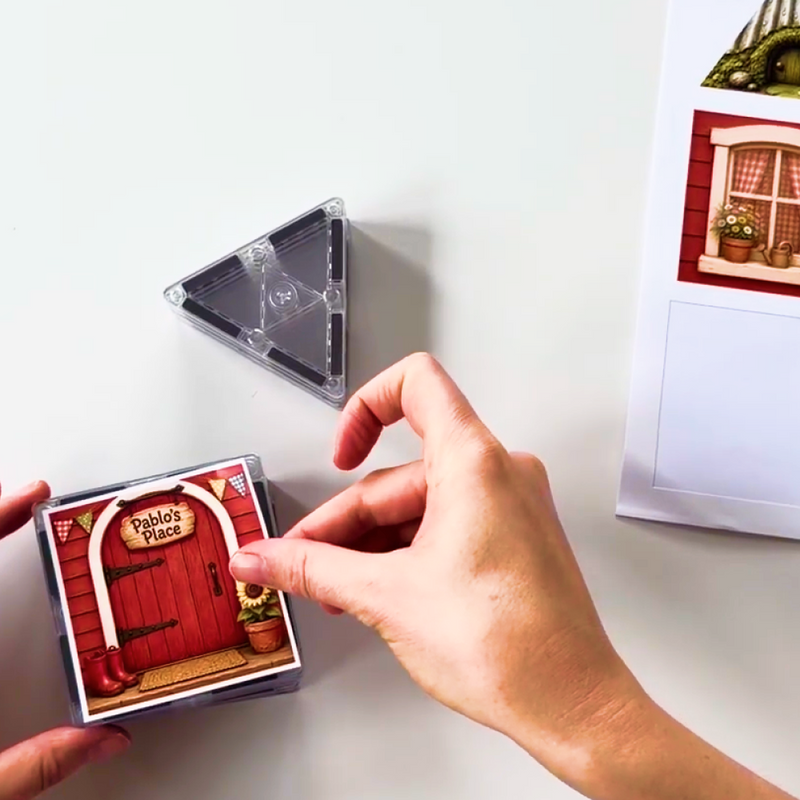
2
Decorate! Personalize your pet's home with stickers.
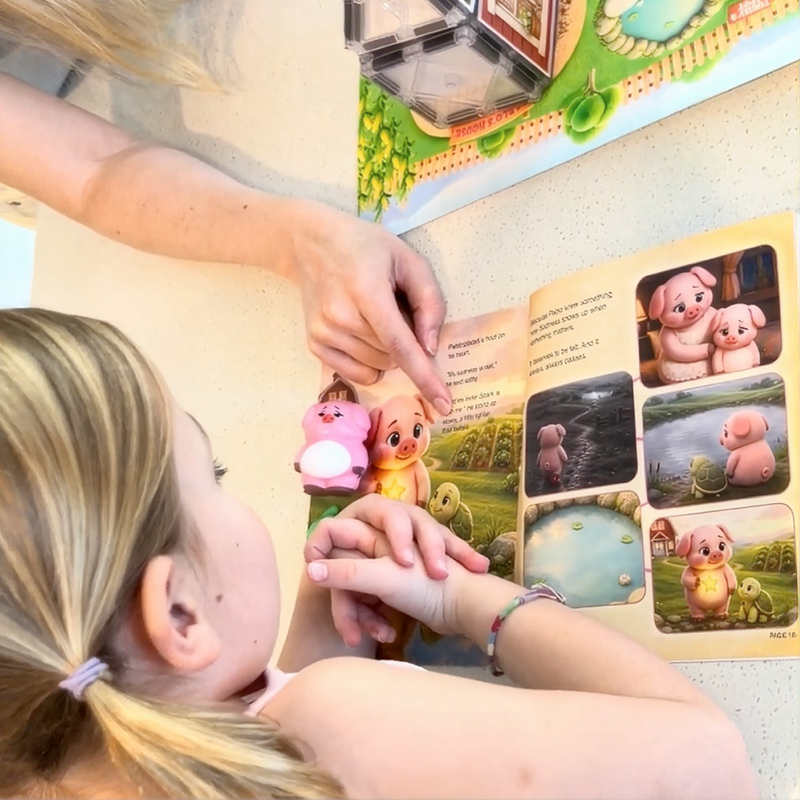
3
Learn! Read Pablo's story and write along!


* Results based on internal study with regular users. Individual results may vary.
You ask, we answer!
What is the return policy?
We offer a 30-day return policy for eligible items.