


27 Daily Routine cards
Educator CreatedDesigned by teachers
30-day returnshassle-free
Secure paymentsSSL encrypted
Ships in 3 daysfrom the US
Popplers: Daily Routines & Emotions and Feelings
Popplers: Daily Routines & Emotions and Feelings
Regular price
$34.99
Sale price
$34.99
Regular price
$39.99
Unit price
per
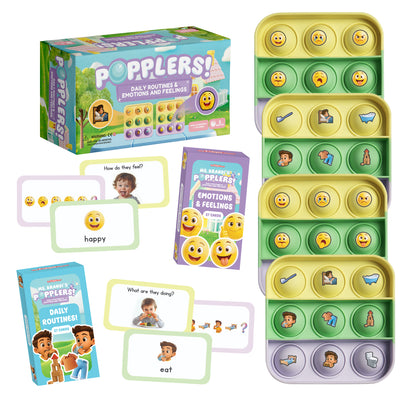
What's Inside The Box
Skills Covered in 30 Days
- Build vocabulary by identifying common daily routines
- Recognize and name a wide range of emotions and feelings
- Master the ability to finish AB patterns
- Strengthen the ability to match facial expressions with corresponding emotions
- Strengthen fine motor skills
- Improve focus and attention while engaging in social-emotional learning
Key Features
- Ages 18 months+
- 1 to 2 players
- Quick & Easy Play (5 min)
Educational Standards
Social-Emotional Development
- Recognizes and labels basic emotions in self and others (happy, sad, angry, scared, etc.).
- Demonstrates understanding of others’ feelings through words or actions.
- Begins to regulate emotions with support (using words to express needs or feelings instead of only actions).
Language and Literacy Development
- Acquires new vocabulary related to daily routines and feelings.
- Engages in conversations about experiences and emotions with adults and peers.
- Uses language to describe familiar routines (e.g., “I brush my teeth before bed”).
Cognitive Development
- Sorts and categorizes objects or pictures (e.g., grouping daily routines, matching emotions with faces).
- Shows persistence and attention when working on simple matching or sequencing tasks.
- Fine Motor Development
- Uses hand strength and coordination to manipulate small pieces (popping, placing, or matching on the mat).
Social-Emotional Development
- Recognizes and labels basic emotions in self and others (happy, sad, angry, scared, etc.).
- Demonstrates understanding of others’ feelings through words or actions.
- Begins to regulate emotions with support (using words to express needs or feelings instead of only actions).
Language and Literacy Development
- Acquires new vocabulary related to daily routines and feelings.
- Engages in conversations about experiences and emotions with adults and peers.
- Uses language to describe familiar routines (e.g., “I brush my teeth before bed”).
Cognitive Development
- Sorts and categorizes objects or pictures (e.g., grouping daily routines, matching emotions with faces).
- Shows persistence and attention when working on simple matching or sequencing tasks.
- Fine Motor Development
- Uses hand strength and coordination to manipulate small pieces (popping, placing, or matching on the mat).
Our games are used in 50,000+ classroomsSpecial discounts for school districts and homeschoolers.
Get a Quote


Skills Built
What skills does Popplers: Daily Routines & Emotions and Feelings build?
Speaking & Listening
Communicating and understanding spoken language
30-Day Money Back Guarantee
How to Play
How to play Popplers: Daily Routines & Emotions and Feelings
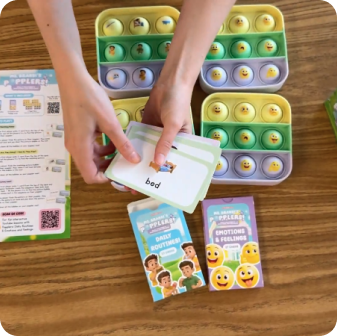
1
Flip a card!
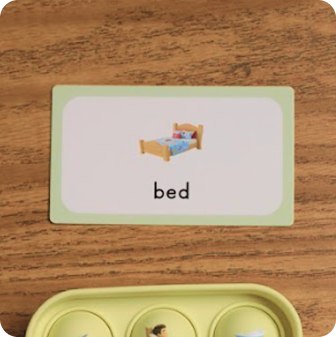
2
Say the word!
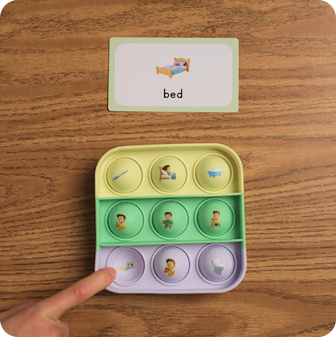
3
Find the matching picture.
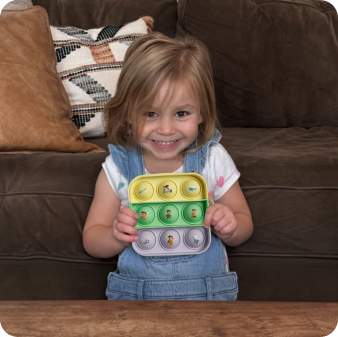
4
Pop all your bubbles to win!
Watch How Popplers: Daily Routines & Emotions and Feelings Works


* Results based on internal study with regular users. Individual results may vary.
You ask, we answer!
What is the return policy?
We offer a 30-day return policy for eligible items.