


4 Sensory Fidget mats
Educator CreatedDesigned by teachers
30-day returnshassle-free
Secure paymentsSSL encrypted
Ships in 3 daysfrom the US
Saving Wabi Sabi
Saving Wabi Sabi
Regular price
$29.99
Sale price
$29.99
Regular price
$34.99
Unit price
per
What's Inside The Box
Skills Covered After 30 Days
- Boosted Social-Emotional Learning "ESL"
- Enhanced Social Skills
- Improved Communication
- Collaborative Learning
- Better Problem-Solving
- Stronger Family Connections
Key Features
- All Ages
- 2-4 Players
- Quick & Easy Play (15 min)
Educational Standards
Common core
- CCSS.ELA-LITERACY.SL.K.1 Participate in collaborative conversations with diverse partners about kindergarten topics and texts with peers and adults in small and larger groups.
- CCSS.ELA-LITERACY.SL.1.1Participate in collaborative conversations with diverse partners about grade 1 topics and texts with peers and adults in small and larger groups.
- CCSS.ELA-LITERACY.SL.2.1.B Build on others' talk in conversations by linking their comments to the remarks of others.
- CCSS.ELA-LITERACY.SL.3.1.B Follow agreed-upon rules for discussions (e.g., gaining the floor in respectful ways, listening to others with care, speaking one at a time about the topics and texts under discussion).
TEKS
- HE.K.8B: Explain the importance of showing consideration and respect for parents, grandparents, other family members, friends, and other individuals.
- HE.1.9A: Demonstrate respectful communication.
- HE.1.9D: Describe and practice techniques of self-control such as thinking before acting.
- HE.1.10A: Describe ways to build and maintain friendships.
- HE.2.10B: Express needs, wants, and emotions in healthy ways.
B.E.S.T
- HE.K.R.1.2 Demonstrate the ability to take turns and share with others.
- HE.K.R.2.4 Identify and recognize basic feelings.
- HE.1.R.1.3 Identify the benefits of sharing and cooperation.
- HE.2.R.1.1 Identify the benefits of showing kindness and treating others with respect.
Ontario
- K- OE1 As children progress through the Kindergarten program, they: communicate with others in a variety of ways, for a variety of purposes, and in a variety of contexts
- K- OE5 As children progress through the Kindergarten program, they: demonstrate an understanding of the diversity among individuals and families and within schools and the wider community
- K- OE22 As children progress through the Kindergarten program, they: communicate their thoughts and feelings, and their theories and ideas, through various art forms
- K- OE25 As children progress through the Kindergarten program, they: demonstrate a sense of identity and a positive self-image
- K- OE26 As children progress through the Kindergarten program, they: develop an appreciation of the multiple perspectives encountered within groups, and of ways in which they themselves can contribute to groups and to group well-being
- Grade 1- B1.1 use effective listening skills, including listening attentively and asking relevant questions, in formal and informal contexts, including conversations and classroom activities
- Grade 2- B1.1 use effective listening skills, including asking relevant questions, restating what they heard, and expressing interest, in formal and informal contexts and for various purposes, including in conversations and various classroom activities
- Grade 2- A1.1 identify how transferable skills can be used to support communication in various cultural, social, linguistic, and domain-specific contexts, and apply them when reading, listening to, viewing, and creating texts of various forms
- Grade 3- A1.1 identify how transferable skills can be used to support communication in various cultural, social, linguistic, and domain-specific contexts, and apply them when reading, listening to, viewing, and creating texts of various forms
- Grade 3- B1.1 use effective listening skills, including asking questions to clarify information and ideas, in formal and informal contexts and for various purposes, including in small- and large-group conversations and various classroom activities
- Grade 4- A1.1 explain how transferable skills can be used to support communication in various cultural, social, linguistic, and domain-specific contexts, and apply them when reading, listening to, viewing, and creating texts of various forms
- Grade 4- B1.1 use effective listening skills, including asking questions to encourage a speaker to elaborate, and responding to the contributions of others in group discussions, in formal and informal contexts and for various purposes
- Grade 5- A1.1 explain how transferable skills can be used to support communication in various cultural, social, linguistic, and domain-specific contexts, and apply them when reading, listening to, viewing, and creating texts of various forms
- Grade 5- B1.1 use effective listening skills, including expressing interest in what is being said at appropriate times, asking questions to encourage a speaker to elaborate, and responding to the contributions of others in group discussions, in formal and informal contexts and for various purposes
- BC
- K- Exchange ideas and perspectives to build shared understanding
- K- Use language to identify, create, and share ideas, feelings, opinions, and preferences
- Grade 1- Exchange ideas and perspectives to build shared understanding
- Grade 2- Exchange ideas and perspectives to build shared understanding
- Grade 3- Exchange ideas and perspectives to build shared understanding
- Grade 4- Exchange ideas and perspectives to build shared understanding
- Grade 5- Exchange ideas and perspectives to build shared understanding
- Alberta
- K- Children explore listening and speaking skills through a variety of literacy experiences.
- Grade 1- Students develop listening and speaking skills through sharing stories and information.
- Grade 2- Students examine and adjust listening and speaking to communicate effectively.
- Grade 3- Students examine and apply listening and speaking skills, processes, or strategies in a variety of formal and informal interactions.
- Grade 4- Students examine and demonstrate how listening and speaking support connections and clarify understandings.
- Grade 5- Students investigate how oral language can be designed to communicate ideas and information.
- Manitoba
- K- 0-S-402 Express reasons for their ideas and opinions.
- Grade 1- 1-S-100 Cooperate and collaborate with others (e.g., share spaces and resources, assume responsibilities, seek agreement).
- Grade 2- 2-S-100 Cooperate and collaborate with others (e.g., make collective decisions, share responsibilities, seek agreement).
- Grade 3- 3-S-100 Collaborate with others to share ideas, decisions, and responsibilities in groups.
- Grade 4- 4-S-100 Collaborate with others to share ideas, decisions, and responsibilities in groups.
- Grade 5- 5-S-400 Listen to others to understand their perspectives.
- New Brunswick
- K to Grade 2 - Identify interests, passions, and strengths.
- K to Grade 2 - Recognize that feelings and emotions can impact well-being, relationships, and the way we engage with others.
- K to Grade 2 - Interact with others to share interest, enjoyments, or new information.
- Grade 3- Identify strategies to build and enhance friendships.
- Grade 4- Identify the importance of communication to build and maintain healthy relationships.
- Grade 5- Analyze how diversity enhances a community.
- Newfoundland & Labrador
- K- 1. Demonstrate an awareness of one’s interests, values and strengths in the development of a positive self concept
- K- 2. Identify and monitor one’s emotions, thoughts, and behaviours
- K- 9. Use skills to interact with others
- Grade 1- 1. Demonstrate an awareness of one’s interests, values and strengths that contribute to a positive self concept.
- Grade 1- 2. Identify and monitor one’s emotions, thoughts, and behaviours.
- Grade 1- 9. Use relationship skills to interact with others in all environments.
- Grade 2- 1. Demonstrate an awareness of one’s interests, values and strengths that contribute to a positive s
- Grade 2- 2. Identify and monitor one’s emotions, thoughts, and behaviours.
- Grade 2- 9. Use relationship skills to interact with others in all environments.
- Grade 3- 1. Demonstrate an awareness of one’s interests, values and strengths in the development of a positive self concept
- Grade 3- 2. Identify and monitor one’s emotions, thoughts, and behaviours
- Grade 3- 9. Use relationship skills to interact with others in all environments
- Nova Scotia
- K- Students will investigate a range of emotions that humans share.
- Grade 1- Learners will investigate characteristics that promote healthy
- and safe relationships.
- Grade 2- Learners will investigate empathy.
- Grade 3- Learners will investigate decisions that affect physical, social, mental, and emotional health.
- Grade 4- Learners will investigate the components of mental health literacy
- Grade 5- Learners will investigate the components of mental health literacy
- Prince Edward Island
- K- 3.1 understand that feelings and emotions are expressed in words, actions, and facial/body expressions
- Grade 1- Students will develop effective interpersonal skills that demonstrate responsibility, respect and caring in order to establish and maintain healthy interactions.
- Grade 2- Students will develop effective interpersonal skills that demonstrate responsibility, respect, and caring in order to establish and maintain healthy interactions.
- Grade 3- Students will develop effective interpersonal skills that demonstrate responsibility, respect and caring in order to establish and maintain healthy interactions.
- Grade 4- Students will develop effective interpersonal skills that demonstrate responsibility, respect, and caring in order to establish and maintain healthy interactions.
- Grade 5- Students will develop effective interpersonal skills that demonstrate responsibility, respect, and caring in order to establish and maintain healthy interactions.
- Saskatchewan
- K- USCK.3 Explore that who I am includes more than my physical self.
- Grade 1- USC1.5 Explore the association between a healthy sense of "self" and one's positive connection with others and the environment.
- Grade 2- USC2.4 Examine social and personal meanings of "respect" and establish ways to show respect for self, persons, living things, possessions, and the environment.
- Grade 3- USC3.2 Examine the spiritual dimension of the "inner self" and determine the importance of nurturing it.
- Grade 4- USC4.3 Examine healthy interpersonal skills and determine strategies to effectively develop new relationships and/or negotiate disagreements in relationships.
- Grade 5- USC5.7Assess the importance of self-regulation and taking responsibility for one's actions.
Our games are used in 50,000+ classroomsSpecial discounts for school districts and homeschoolers.
Get a Quote


Families Who Have Already Learned to Read
4.93
30-Day Money Back Guarantee
How to Play
How to play Saving Wabi Sabi
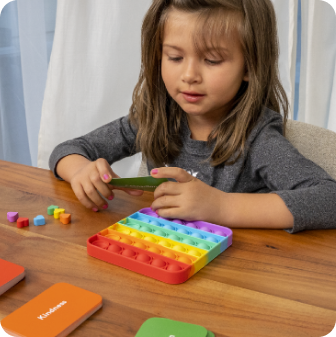
1
Answer conversation cards
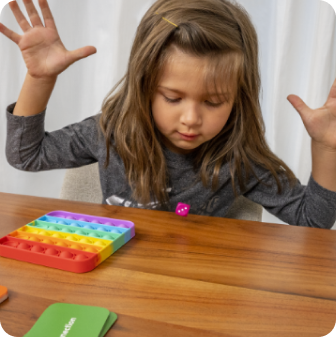
2
Roll & Pop the color that matches the card
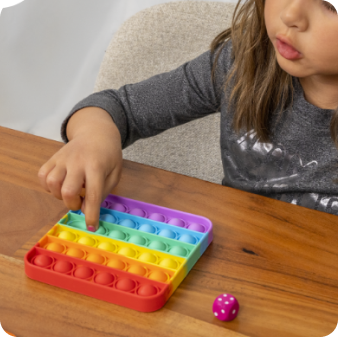
3
Pop a color row to place the color heart on the Saving Wabi Sabi card
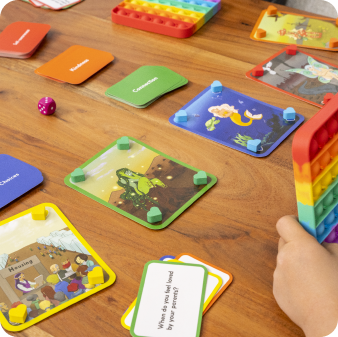
4
Fill all Wabi Sabi cards with hearts & flip them over
Watch How Saving Wabi Sabi Works


* Results based on internal study with regular users. Individual results may vary.
You ask, we answer!
What is the return policy?
We offer a 30-day return policy for eligible items.